Foreign drones and the FCC Covered List: a fact-based guide for compliance teams
.svg)

Quick Summary
The 30-second compliance brief
- The trigger: Yesterday, the FCC announced that it placed all foreign-produced drones on its“Covered List”. This includes but is not limited to DJI.
- Impact: The FCC is now prohibited from authorizing new foreign drone models for the US market, except where a specific government waiver has been issued. This is not a retroactive ban. Existing authorized hardware remains legal to purchase, own, and fly.
- Strategic view: You can refurbish, repair and even replace existing units with new drones from the same product lines. As part of your procurement strategy, however, you may want to consider alternative drone hardware providers to diversify your fleet.
January 2026 update: The FCC has issued a one-year exemption (valid through January 1, 2027) removing all Blue UAS and qualified “domestic end products” from the Covered List while establishing a conditional waiver process for other non-U.S. drones. You can find the full details and formal guidance in the FCC’s January 7, 2026 Public Notice (DA 26-22).
–––
Headlines like “FCC bans foreign made drones” are dominating news feeds. This causes understandable concern for drone operations managers using non-U.S. systems like DJI.
But for compliance teams, the details matter.
There is a critical difference between a total ban and a supply chain constraint. This article unpacks the real legal consequences, explains why your fleet remains operational, and how to prepare for a diversified future.
The legislative detail
On December 21, 2025, an interagency body organized by the White House issued a formal finding (the Interagency Report) that foreign-produced drones, as well as certain critical components like motors and cameras, posed “an unacceptable national security risk” to the U.S. This finding was premised on a wide-range of concerns, from dependence on Chinese manufacturing to threats to the 2026 World Cup, as well as generalized remote access and data security concerns.
The Interagency Report creates an exception process for drones and components that receive specific approval from the Department of War or the Department of Homeland Security. We expect to learn more about how this approval process will operate in the coming months.
As a result of this finding, the Federal Communications Commission (FCC) placed all foreign-made drones, as well as certain critical components, on its “Covered List”. The FCC order and Interagency Report can be found here.

Separating fact from friction
For compliance officers and legal teams across the construction, energy, and agriculture sectors, this development is likely generating a flurry of questions from pilots and site managers. While the headlines may be alarming, the regulatory reality is much more nuanced than a simple “ban.”
Here is a breakdown of what this action actually means for your drone program, why it acts as a supply chain challenge rather than an operational grounding, and how DroneDeploy can help you navigate the path forward.
To provide sound advice to your business teams, it is critical to distinguish between future market access and current operational legality.
Placement on the Covered List prohibits the FCC from issuing new equipment authorizations for covered hardware makers and equipment. In practice, this effectively pauses foreign manufacturers’ ability to bring brand-new drone models to the U.S. market. As the FCC says in its related Fact Sheet:
“[T]oday’s decision does not impact a consumer’s ability to continue using drones they previously purchased or acquired. Nor does today’s decision prevent retailers from continuing to sell, import, or market device models approved earlier this year or previously through the FCC’s equipment authorization process. By operation of the FCC’s Covered List rules, the restrictions imposed by today’s decision apply to new device models.”
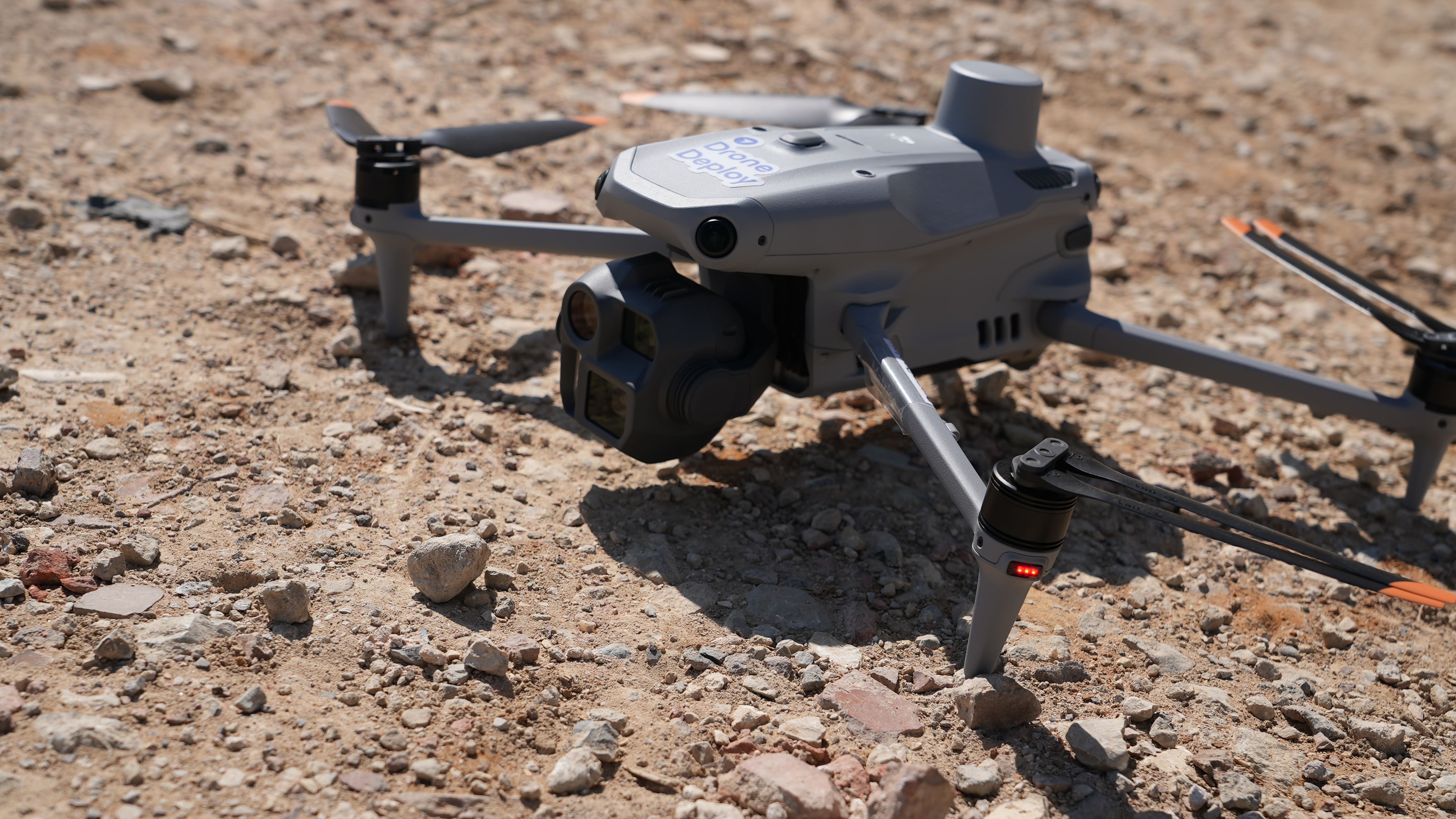
In other words, this is not a retroactive ban on products that have already been approved. The hundreds of thousands of aircraft currently in operation – including popular DJI models like the Mavic 3 Enterprise, Matrice 4 Enterprise, and Dock 2s and 3s – retain their existing FCC authorizations and may continue to be operated.
Moreover, new units and replacement parts for already-approved models may continue to be purchased, owned and operated. While the FCC has the authority to revoke existing authorizations, that requires a separate adjudicatory process that has not been triggered by this covered listing. In short, this FCC action does not impact your ability to purchase, own or operate existing DJI and other foreign-made models.
A supply chain issue, not a compliance crisis
In short, this is a long-term procurement issue, not a short-term grounding order. We believe that the correct way to look at this development is through the lens of fleet longevity and supply chain diversification:
- Current operations: The FCC covered listing does not require that you ground your existing fleet of non-U.S. drones. Your ongoing projects can continue as planned.
- Future procurement: The pipeline for new foreign-drone technology is now constricted. As your current airframes reach their end of life, you will likely not be able to replace them with newer generations of the same brand, absent a specific government-issued waiver. However, you can refurbish, repair and even replace existing units with new drones from the same product lines. As a result, current and near-current generations of these products will likely provide years of additional service life.
- Data security: While the Interagency Report references generalized data security risks, it does not provide specific new findings in this regard. However, if your organization has specific data concerns or requirements, you can continue to rely on DroneDeploy’s robust security features – such as Firewall, local data modes and ISO-certified cloud security.
Diversifying your fleet using DroneDeploy
Uncertainty is the enemy of action. While Chinese-produced drones have dominated U.S. commercial operations for years, the enterprise drone ecosystem has matured significantly, and valid alternatives now exist for most major data capture use cases.
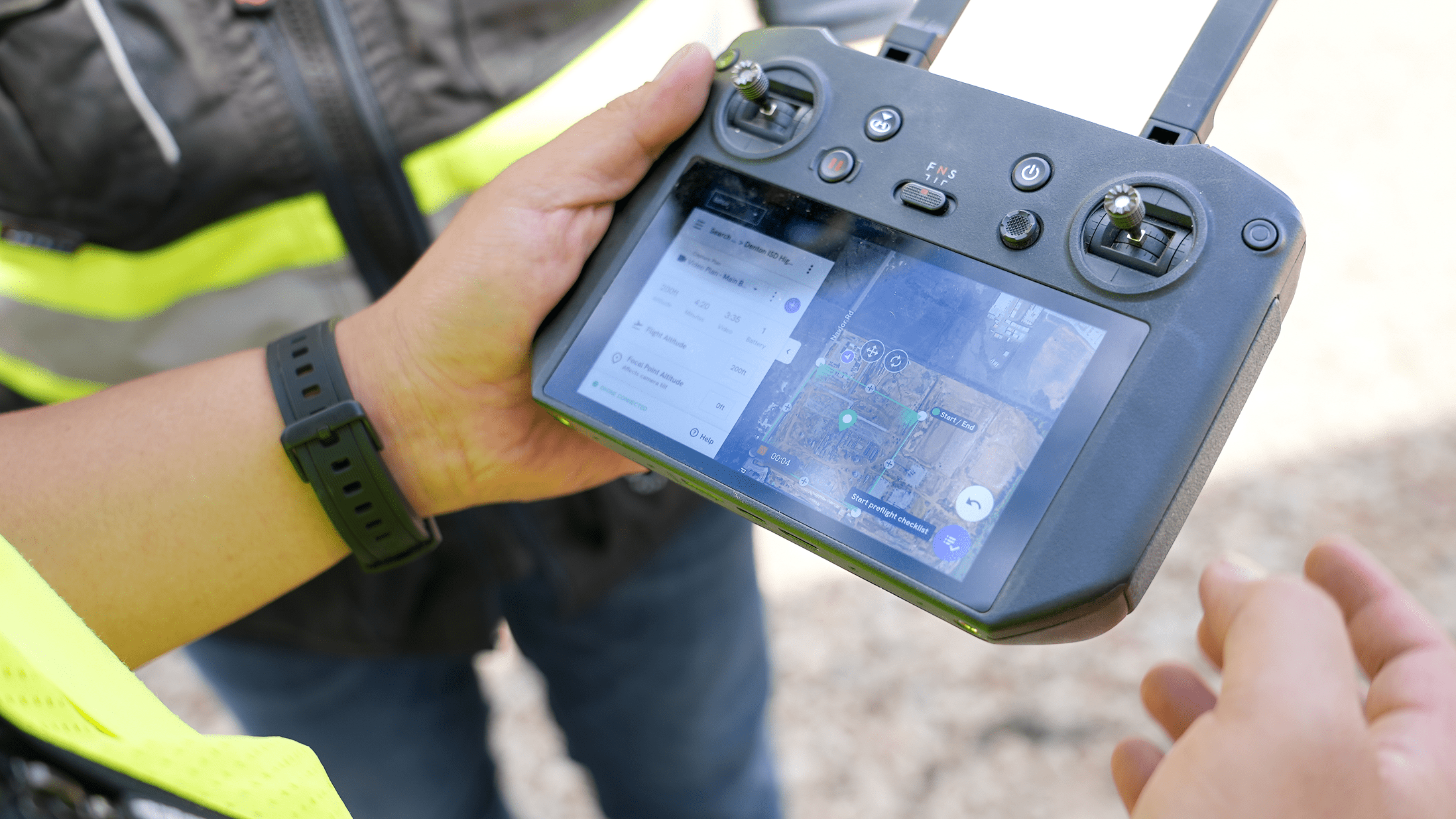
Because DroneDeploy is – and has always been – hardware agnostic, our platform provides a unified experience across a diverse range of aircraft. Whether you are flying a DJI drone today or transitioning to an alternative system tomorrow, your data, maps, and 3D models live in one place. Regardless of which system you choose, your pilots can view the same high-accuracy outputs, ensuring your workflow remains uninterrupted.
Next steps
We advise compliance and operations leaders to take a “don't panic, but prepare” approach:
- Understand the regulations: Base your internal guidance on the actual text of the Interagency Report and FCC regulations rather than media reports.
- Audit your fleet: Ensure you have an accurate count of active airframes and an estimate of their remaining lifespan so you can forecast replacement needs.
- Know your options: If you are considering diversifying your fleet, our product experts are ready to help. Review the 2025 DroneDeploy Hardware Guide to understand options. We can recommend hardware configurations that match your specific use cases – from photogrammetry to thermal inspection – ensuring your program remains resilient regardless of regulatory shifts.
Contact a DroneDeploy product expert
This post is provided for general information purposes and should not be taken as legal advice. Compliance teams should review relevant legal requirements themselves to understand how they impact their unique situation.
.png)
FAQ



Ready to learn more?
Contact sales to see how DroneDeploy can give your teams the power to document and analyze your sites from the air and ground – all in one AI-powered platform.