The most efficient way to keep your jobsite safe
.png)




.png)



.png)


.png)
.png)

.png)
%201%20(2).png)









.png)


.avif)
%20(1).png)
How Safety AI works
How much could DroneDeploy save you?
Try it yourself in this interactive preview
.avif)
Build your fleet (or let us do it for you)
Supported hardware
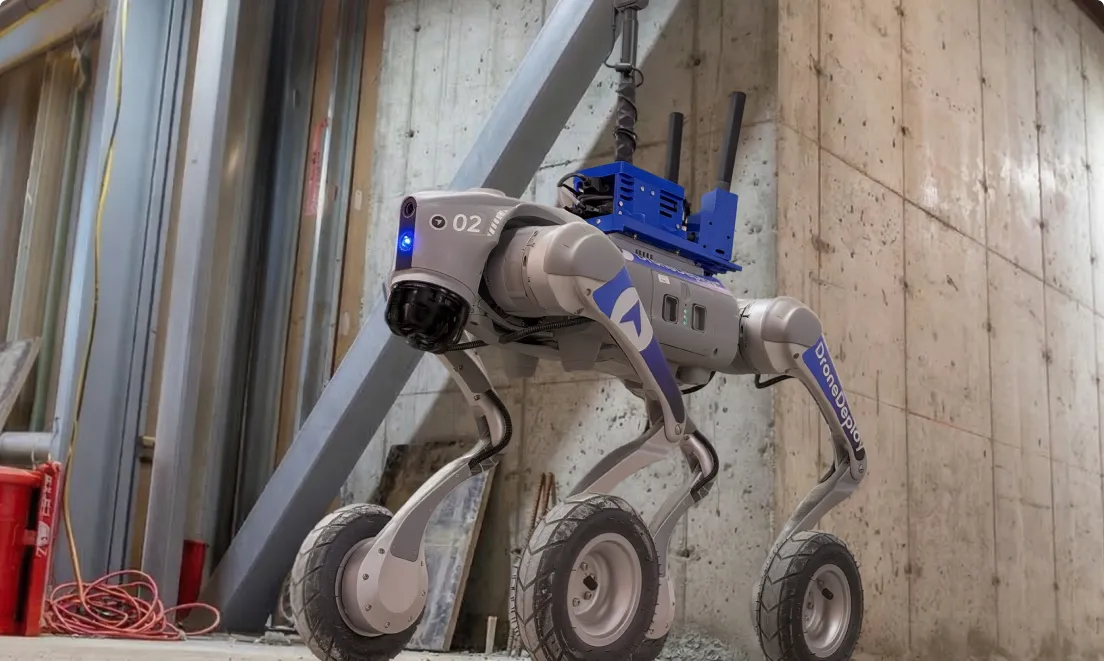
Our processing engine works with data from any camera source and supports automated flights, mission planning, and execution across drones, ground robots, docked systems, and 360 cameras.
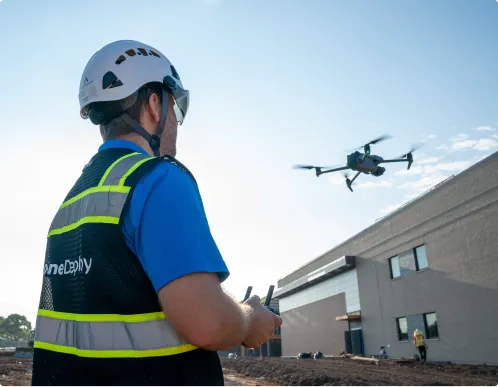
Data on demand
Need the data but don't have pilots or hardware yet?
Use our services network to capture key corridors and facilities at the cadence you need, with processed maps, photos and models delivered straight into your DroneDeploy account.
Is DroneDeploy the right fit for your operations?
Safety managers, superintendents, directors of safety and project engineers managing hazard oversight across active construction programs use Safety AI to add a consistent, automated layer of observation to existing site capture. Analysis runs against footage already captured on site and surfaces findings across every project in the portfolio – no additional manual input or separate review process required.
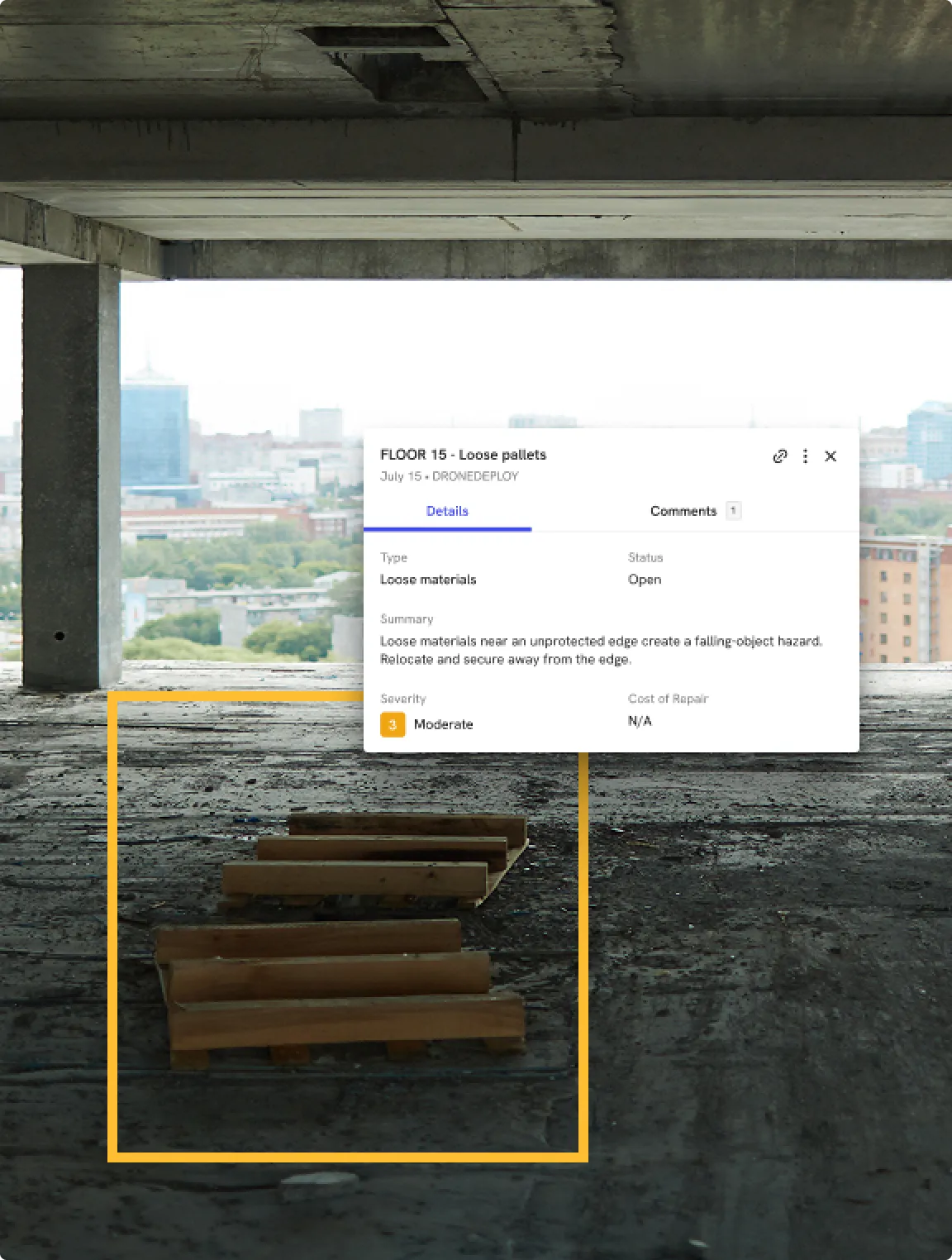
Missing guardrails, exposed edges, improper PPE, fall hazards and a broad set of OSHA 1910 and 1926 violations. See the Safety AI help article for the full list of detectable risk categories. Every finding links to the relevant OSHA standard and confidence score.
Safety AI identifies OSHA safety risks at 95% confidence. Findings include confidence scores – your team prioritizes based on certainty, not guesswork.
No new hardware is required. Safety AI works with any 360 camera already in use on site. Walk the site as you normally would, upload the data and the report is returned automatically.
Reports generate automatically after upload – typically within minutes. The report is organized by finding, location and OSHA standard, ready to distribute to the project team or safety director.
Safety AI adds a consistent, automated layer of observation on top of what your safety team already does. It catches risks that a walkthrough might miss and runs at a frequency a single person cannot sustain across multiple sites.
Every finding includes a confidence score. Low-confidence flags are surfaced separately so your team can prioritize. Your team always makes the final call on any finding.
Each report includes timestamped findings, photos, location references and OSHA standard citations. That creates a documented record of safety observations usable for compliance tracking, subcontractor accountability and incident review.
Safety AI works wherever a 360 camera can walk – from early site preparation through interior fit-out. Coverage is consistent as long as the capture covers the relevant areas.
A superintendent or engineer walks the site with a 360 camera. Data uploads automatically after the walk. A Safety AI report appears in their account organized by finding, location and OSHA standard. Safety managers review findings, contact project teams on critical flags and log resolved items. No manual compilation, no separate software.