How thermal drone surveys catch roof problems before they become expensive
.svg)
Quick Summary
- What it captures: Temperature differences invisible to standard cameras — moisture under membranes, insulation voids, failing seams
- How it works: Thermal sensors detect infrared radiation and stitch into a georeferenced heat map of the full roof surface
- Where it's used: Moisture surveys, pre-purchase due diligence, insurance documentation, post-installation verification, warranty inspections
DroneDeploy Aerial supports thermal capture and processing, storing thermal maps alongside RGB imagery in one platform.
Standard cameras only show you what's on the surface. Moisture trapped under a roofing membrane, failing insulation, a compromised seam – none of that shows up until you're already looking at a repair bill, a tenant complaint or an insurance dispute.
Thermal drone surveys change that. A thermal sensor detects infrared radiation emitted by materials based on their temperature and converts it into a visual map of heat distribution across the entire roof. In a single flight, you get a picture of what's happening beneath the membrane – before it becomes a problem you can see with your eyes.
What you actually see in a thermal roof survey
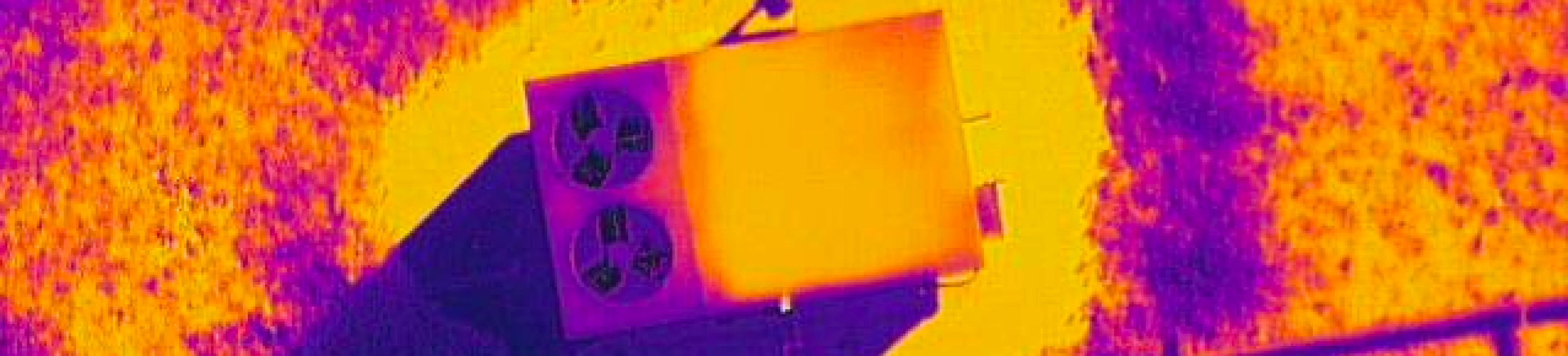
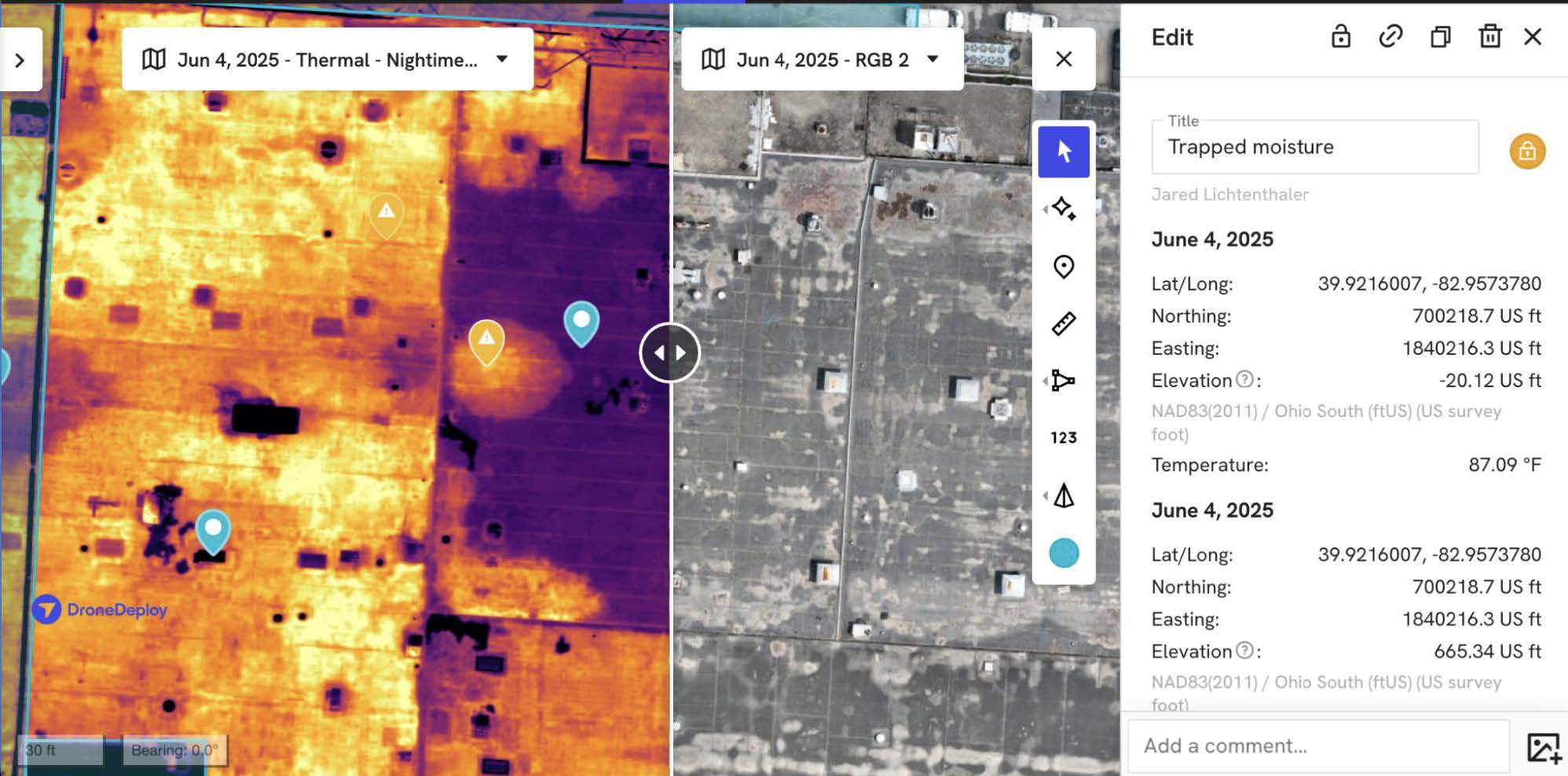
Every material emits infrared radiation based on its temperature. A thermal camera captures that radiation and maps it visually – warmer areas show in reds and yellows, cooler areas in blues and purples. The patterns those colors form tell you what's happening under the membrane.
The most consistent findings across roof types:
- Moisture intrusion: Wet insulation retains heat longer than dry material. After a sunny day, saturated areas stay warm against cooler dry sections — often showing up on a thermal map hours before any water appears inside the building
- Insulation voids: Missing or compressed insulation creates thermal bridging — spots where heat moves directly through the roof assembly rather than through the insulation layer
- Seam and lap failures: Compromised seams often read differently than surrounding membrane, particularly during temperature transitions in early morning and evening hours
- Drainage problems: Ponding areas retain heat differently than sections draining properly, making drainage patterns visible across the full roof plane
Learn more about thermal drone surveying in our Complete Guide for Thermography
Where thermal surveys actually get used
Pre-purchase due diligence. Roof replacement is one of the largest capital expenses in property ownership. A thermal survey before acquisition shows existing moisture damage and insulation condition – data that directly affects repair budgets, negotiation positions and capital planning.
Insurance documentation. Thermal maps produce timestamped, georeferenced records of roof condition at a specific point in time. When a claim goes into dispute, that documentation shows what was there before the damage event. Insurers are paying more attention to commercial roof claims, and having a condition record makes a real difference.
Portfolio condition assessments. You can't put an inspector on every roof every year. Thermal surveys give property managers a consistent view of condition across all their buildings – from the same vantage point, using the same methodology – and let you prioritize repairs based on actual condition rather than estimated age.
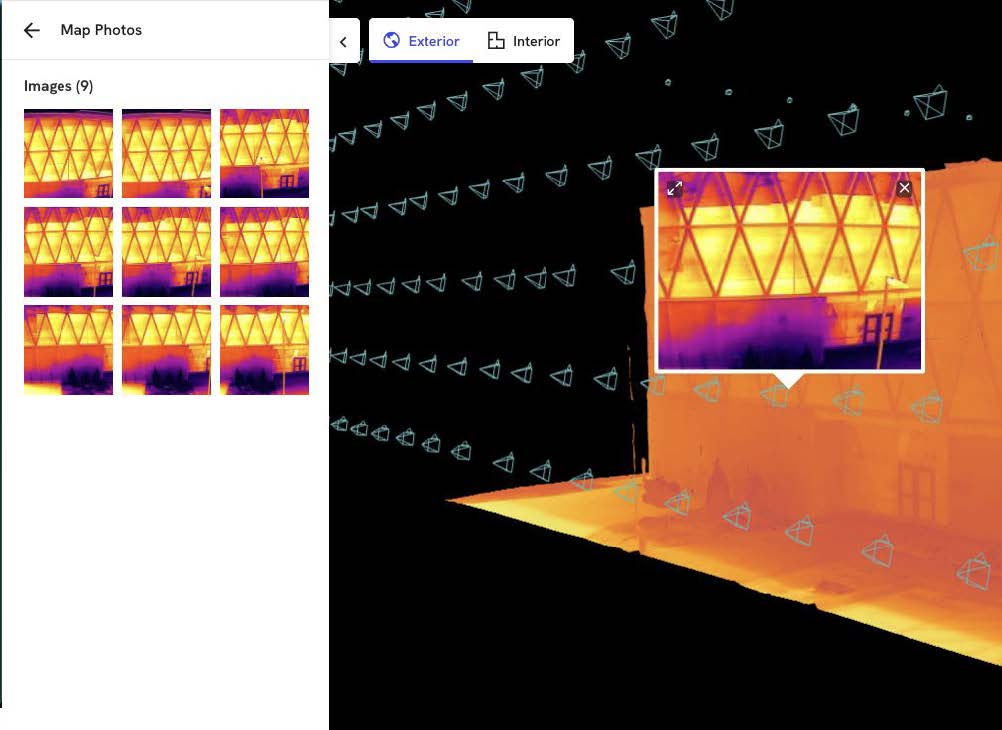
Warranty verification. Most commercial roofing warranties require periodic inspections. Thermal surveys satisfy those requirements and produce the documentation you need if a claim arises. When you have a history of condition data, warranty disputes move faster.
Post-installation verification. After a new roof or repair, a thermal survey confirms the system performs as specified – no moisture infiltration, no insulation voids, no drainage issues. Roofing contractors use this to document completion. Property managers use it as a baseline for tracking condition over time.
Hardware and timing: what actually matters
Radiometric vs. standard thermal
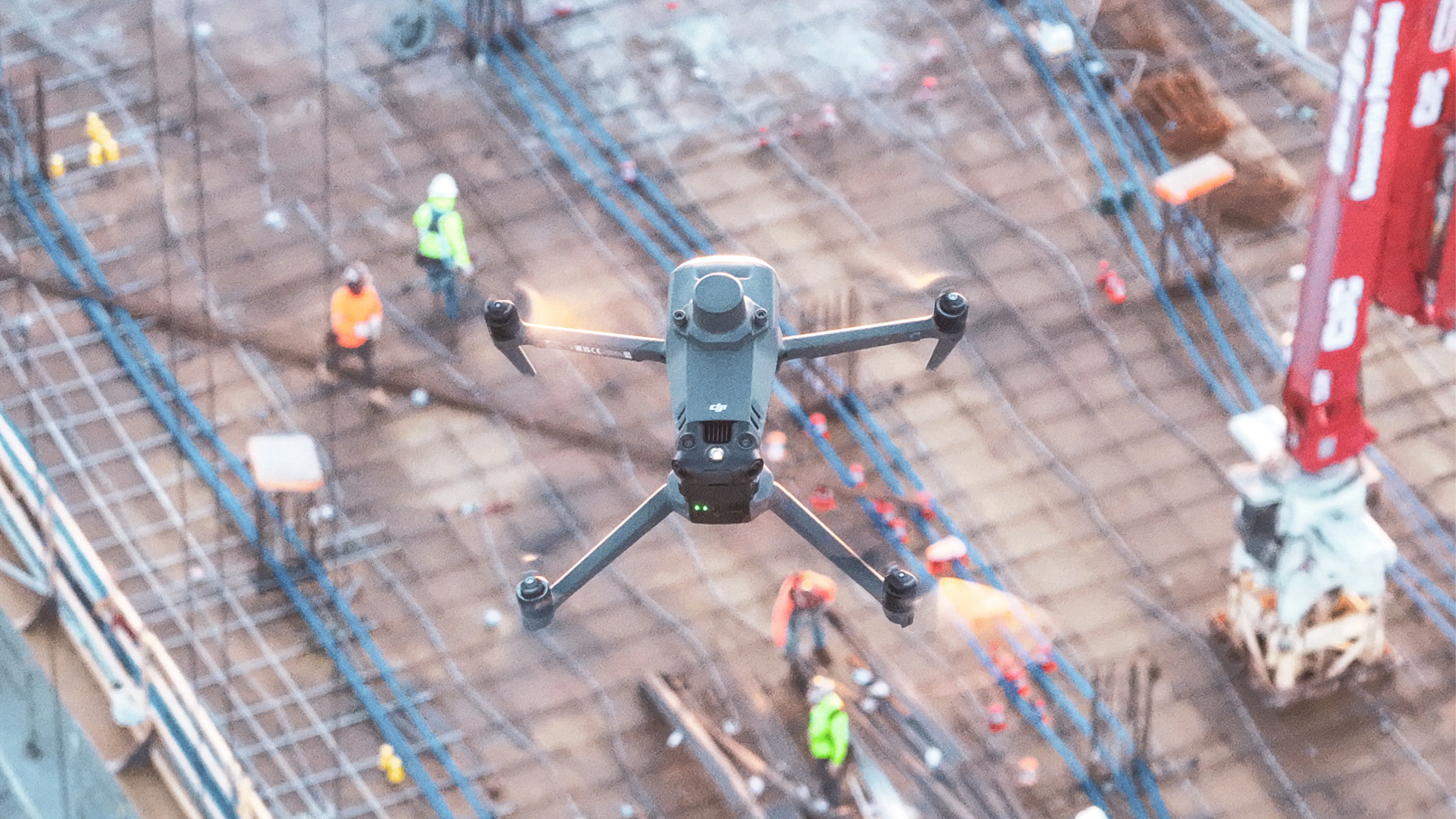
Standard thermal cameras show relative temperature differences – good for spotting anomalies visually. Radiometric cameras embed actual temperature values in each pixel, so you can measure and document specific temperatures at any point on the map. For insurance documentation, engineering analysis and warranty claims, radiometric is worth it. You're producing a record, not just a visual.
When to fly
Thermal contrast depends on temperature differentials, and roof surveys require specific conditions.
For moisture detection: fly 2–4 hours after sunset following a clear, sunny day. Solar heating warms the assembly throughout the day, and wet areas hold that heat longer — producing the strongest contrast after dark. Early evening in fall or spring is usually ideal for commercial roof work, when HVAC systems create strong differentials against outdoor air.
Avoid flying during or after rain, in high winds or when temperatures are changing rapidly. You'll get unusable data.
Tip: A temperature differential of at least 10°C (18°F) between interior and exterior produces the clearest signatures for building envelope work.
Flight settings
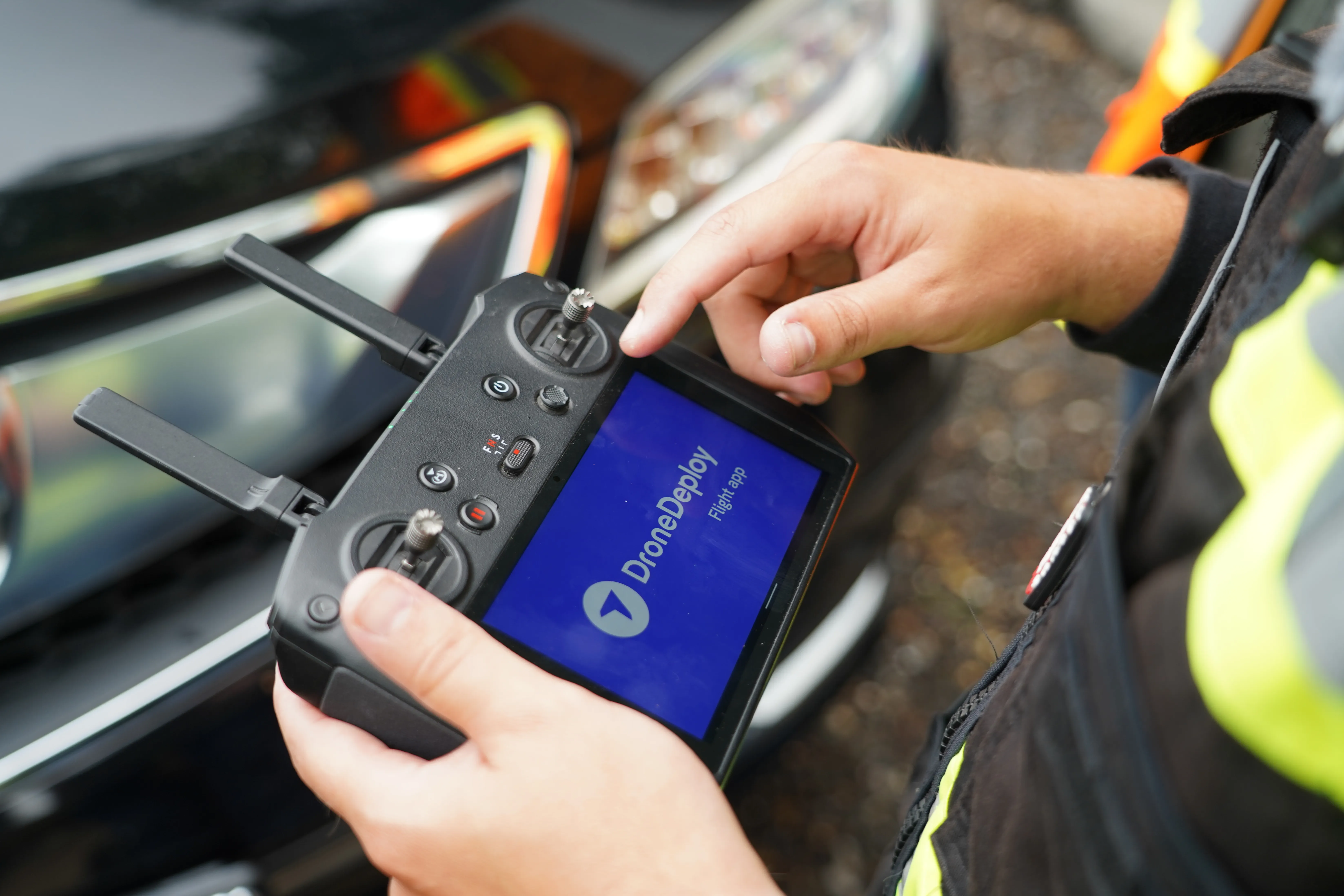
Thermal flights need higher overlap than standard RGB – typically 80% front, 70% side – because lower sensor resolution means less ground covered per image. DroneDeploy's flight planning handles this automatically based on your sensor specs.
Processing and using the data
Standard processing stitches thermal images into a single orthomosaic showing temperature variation across the roof. That output works for initial condition reviews and for communicating findings to owners who don't need precise numbers.
Radiometric processing goes further – preserving temperature values in each pixel so you can click anywhere on the map and get an actual reading. DroneDeploy supports both from the same flight, so you're not choosing one or the other.
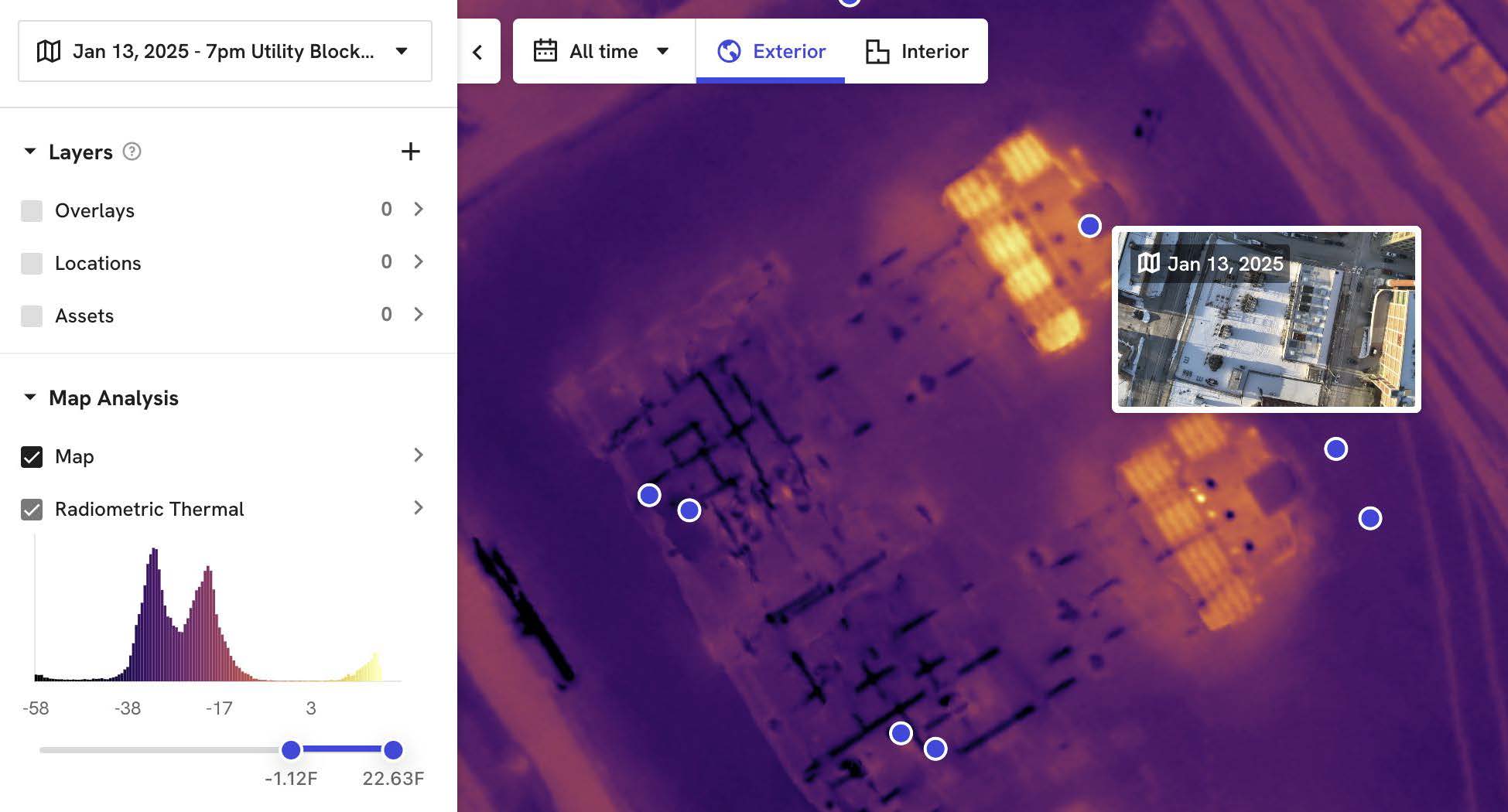
Once processed, the maps are most useful alongside RGB imagery. A hot spot on the thermal tells you something's wrong. The RGB view tells you exactly what's physically there – a penetration, a seam, a repair patch, an area of visible membrane damage. That combination is what makes the findings actionable.
Thermal data is also most valuable when it lives alongside your other building records. When thermal maps, RGB captures and prior inspection data share one platform, you can track changes across capture dates and give asset managers a real picture of condition over time.
Building a repeatable thermal inspection workflow
- Prioritize by risk. Start with older roofs, buildings with known moisture history, upcoming lease renewals or pending warranty claims. Then build a regular cycle for the rest of the portfolio.
- Save repeatable flight plans. Set up plans for each property once and reuse them. Consistent parameters mean your data is actually comparable across years.
- Standardize capture conditions. Same time relative to sunset, same seasonal window, same weather criteria. Consistent conditions make multi-year comparisons meaningful.
- Store everything centrally. All thermal data, RGB captures and prior inspection records in one place – accessible to your team, and to the owners, engineers and contractors who need to reference it.
- Generate annotated reports. Annotated thermal imagery with location, severity and recommended action gives decision-makers what they need without requiring a follow-up site visit.
- Repeat at key intervals. Post-installation, annually, post-storm. The historical record is what supports capital planning, warranty claims and insurance documentation over the life of the asset.
Ready to add thermal mapping to your roof inspection workflow? DroneDeploy processes thermal imagery alongside RGB data in one platform. Book a demo to see how it works across your portfolio.
.png)
FAQ

Ready to learn more?
Contact sales to see how DroneDeploy can give your teams the power to document and analyze your sites from the air and ground – all in one AI-powered platform.