Construction mapping software that actually improves jobsite performance
.svg)
.png)
Quick Summary
Modern construction mapping software turns drone and ground captures into a measurable, time-stamped record of your jobsite.
Instead of manually compiling progress photos, chasing quantities or guessing percent complete, teams work from a current, georeferenced map that consolidates aerial imagery, 360 walks, GIS data and design overlays in one place.
The result is faster decisions, fewer disputes and tighter control over schedule and cost, without adding extra work for field crews.
Construction teams are already capturing sites with drones and 360 cameras. The question isn’t whether you have data. It’s whether that data is structured in a way that helps you run the job.
This guide explains what construction mapping software does on active projects, the core technologies behind it, how it improves workflows from precon to closeout and what to look for when evaluating platforms.
Let’s get into it.
What construction mapping software does on active jobsites
Construction mapping software analyzes site captures and organizes them by location and date on a shared map. Instead of storing imagery in folders, it anchors every capture to real-world coordinates so teams can measure, compare and verify work visually.
On a typical job, the workflow looks like this:
A drone flight or 360 walk happens on a consistent cadence. Imagery uploads automatically. Within hours, the project is updated with a high-resolution, 3D orthomosaic or ground walk. Teams can open the map, click any location and see exactly what was built and when.
No separate progress photo log. No manual stitching. No recreating reports before the OAC meeting.The map becomes the operating layer for the project.
Why spatial intelligence now drives schedule control
Most schedule risk comes from blind spots. Construction mapping software removes those blind spots by making progress measurable by area. Superintendents can compare this week’s capture to last week’s, measure installed quantities and confirm whether critical path scopes are moving.
Instead of asking trades for percent-complete updates, teams reference a visual record tied to exact coordinates. That shift from subjective reporting to spatial verification improves schedule conversations immediately.
It also strengthens billing accuracy. When earthwork volumes or installed work can be measured directly from aligned site data, pay applications become less contentious.
Core technologies behind modern construction mapping
This mapping software is not just drone imagery. It’s a combination of accuracy controls, geospatial context and cloud processing that makes the map defensible.
Reality capture as the foundation
Drone photogrammetry converts overlapping images into orthomosaics, point clouds and surface models.
Orthomosaics provide a high-resolution, geo-corrected map of the site. Surface models enable elevation checks and volumetric analysis. Time-series captures allow side-by-side comparisons across dates to visualize change.
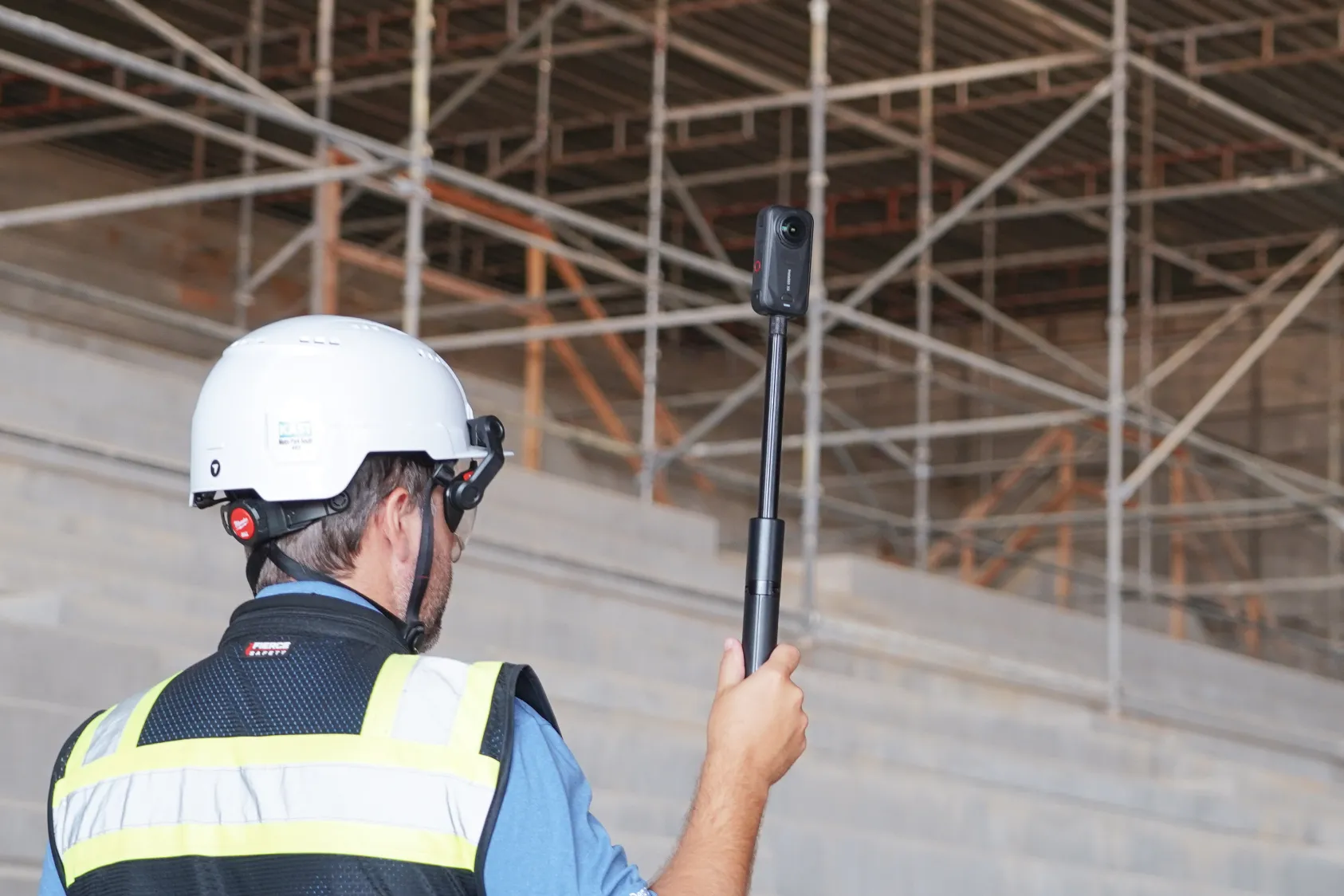
Ground reality capture uses 360 cameras to create a complete spherical image. These interior and exterior images are stitched together into a 3D, navigable virtual tour for cost-effective site documentation, progress tracking, and quality control.
When capture is repeatable, progress becomes trackable.
High-accuracy positioning with GNSS
Accuracy determines whether your measurements are trustworthy. Modern platforms support RTK or PPK correction methods and ground control workflows. That alignment ensures:
- Earthwork quantities hold up under scrutiny
- Overlays match design and BIM files
- Surfaces align across multiple flights
- Elevation checks reflect actual field conditions
Without accuracy, drone maps are visual documentation. With it, mapping becomes project control.
GIS as contextual intelligence
Geographic information systems (GIS) add another layer of value. Utilities, right-of-way limits, environmental zones and terrain data can be layered onto current site capture.
This matters during planning and coordination. When GIS context is combined with up-to-date aerial data, teams can plan access routes, staging areas and excavation limits with fewer assumptions.
.png)
Bridging the gap between field and office
One of the biggest inefficiencies in construction is translation. The field sees conditions in real time, but the office sees reports compiled hours or days later.
Construction mapping software closes that gap by giving both groups access to the same visual source of truth.
The process looks something like this:
A superintendent can click on a slab area and confirm rebar placement before a pour. A project manager can measure that same area to verify scope. An executive can open a shared link and immediately understand site progress.
Because every capture is time-stamped and location-aware, the platform also creates a defensible historical record. When disputes arise over damage, delays or installation timing, teams can reference mapped evidence rather than memory.
Measurement and volumetric analysis without a surveyor
With accurate drone mapping, teams can calculate cut and fill volumes across large grading areas, measure stockpiles without climbing them and verify subgrade elevations before concrete placement. Plans can be overlaid directly onto orthomosaics to validate layout and detect deviations early.
Instead of sending survey crews back out for routine checks, teams extract measurements from the most recent capture. That reduces labor hours and accelerates decision-making.
For heavy civil projects, the impact is significant. Large corridors and utility runs can be monitored at scale without adding expensive survey time.
.png)
Comprehensive site documentation that reduces risk
Every project eventually faces questions about what happened and when. Construction mapping software creates a chronological, searchable visual record of the jobsite, so everyone can operate from the same perspective. This improves:
- Claim defense
- Utility documentation before backfill
- Envelope and façade verification
- Warranty investigations
Instead of searching through disconnected photo folders, teams navigate through a mapped timeline of the site. That documentation strengthens both internal coordination and external communication with owners.
How construction mapping supports different project types
Heavy civil and infrastructure projects benefit from scale. Drone mapping provides corridor-wide visibility, faster inspection cycles and objective quantity tracking across earthworks and utilities.
Commercial and residential developments gain clarity during vertical construction. Teams can verify envelope progress, coordinate laydown areas and align exterior conditions with interior 360 capture and BIM overlays.
Preconstruction teams use mapping to capture existing conditions quickly, reducing assumptions during bidding and logistics planning. Early spatial clarity lowers the likelihood of RFIs once construction begins.
Across sectors, the value is consistent: fewer unknowns.
What to look for when evaluating construction mapping software
Not every mapping platform is built for active construction. When comparing options, focus on three criteria.
Accuracy and repeatability. If your workflows involve quantities, grading or pay applications, accuracy must be reliable across flights and dates.
Ease of use. Field teams should be able to capture and access data without complex setup. If adoption requires extensive training, usage will stall.
Scalability and support. Enterprise teams need consistent workflows across multiple projects, strong onboarding and responsive technical support.
Most importantly, choose software that fits into how your teams already operate. The best platforms turn imagery you are already collecting into structured, actionable insight.
The future of construction mapping
As reality capture becomes more frequent and automated, mapping platforms are increasingly connected to AI-driven analytics, digital twins and scheduling tools.
Enhanced photogrammetry and LiDAR workflows will produce denser models. Automated change detection will flag deviations earlier. Deeper BIM integration will tighten design verification. Ground robots and docks will automate capture, making it consistent and reliable.
The trajectory is clear: reality capture is becoming the source of truth for modern construction.
See how other builders are making the most of construction mapping software:
Run your jobsite from a single source of truth
When aerial, ground and design data live on one georeferenced map, teams spend less time compiling reports and more time managing risk. In an industry defined by thin margins and constant pressure, a high level of visibility is not optional.
It is the difference between reacting to problems and staying ahead of them.
See this technology in action! Book a demo.
.png)
FAQ
FAQs about construction mapping software
Can construction mapping software work without BIM models?
Yes. Most platforms generate measurable maps and surfaces directly from drone or ground captures. Adding BIM improves comparison, but it is not required for progress tracking or measurement.
How accurate is construction mapping software?
Accuracy depends on the workflow. Platforms that support RTK, PPK and Ground Control Points (GCPs) can deliver high-accuracy results suitable for volumetrics and design verification.
Does construction mapping replace surveyors?
No. It complements survey teams by providing frequent site visibility between formal surveys. Licensed surveyors still handle control and legal boundaries.
What hardware is needed for construction mapping software?
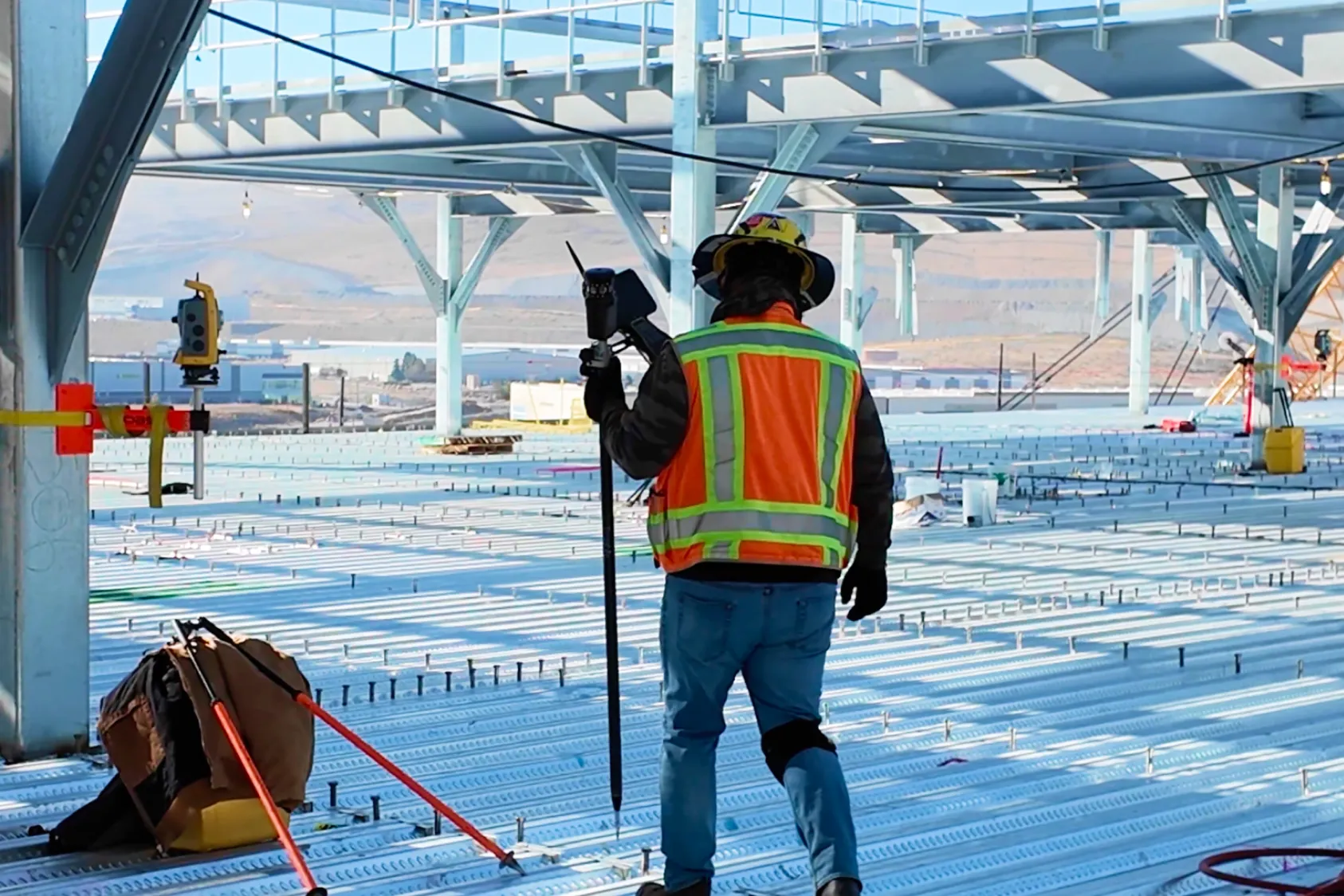
Most platforms work with standard commercial drones, GNSS receivers and 360 cameras, allowing teams to use equipment they already own.
How often should a site be mapped?
Most active projects capture at least weekly. High-volume earthwork or fast-paced phases may require more frequent flights to maintain accurate progress tracking.
Can construction mapping software measure earthwork volumes?
Yes. With proper alignment, teams can calculate cut and fill, measure stockpiles and verify grading directly from drone-generated surfaces.
Is construction mapping software only for large projects?
No. While large projects like data centers see major value, commercial and residential builds benefit from progress tracking, documentation and design verification at any scale.
Ready to learn more?
Contact sales to see how DroneDeploy can give your teams the power to document and analyze your sites from the air and ground – all in one AI-powered platform.